Demand of Macronutrients in Grass Brachiaria humidicola in Response to Time of Year, Fertilization and Cutting Frequency
DOI:
https://doi.org/10.28940/terralatinoamericana.v43i.2139Keywords:
total biomass, nitrogen percentage, phosphorus percentage, potassium percentage, internal requirementAbstract
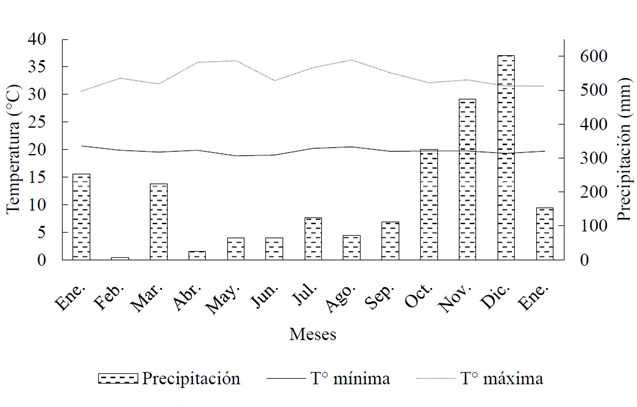
The species Brachiaria humidicola has high productive potential in the humid Mexican tropics due to its adaptability to flooded and acidic soils of low fertility, supported by its high efficiency in nutrient extraction through its root system and its association with mycorrhizae. The objective of this study was to determine the demand for nitrogen (N), phosphorus (P), and potassium (K) of Brachiaria humidicola Rendle under three climatic periods, different fertilization levels (N, P, and K), and three cutting frequencies. Nine treatments were evaluated in a split-plot design with a factorial arrangement, randomly distributed, each with three replications. The SAS
software package was used for the analysis of variance, and mean comparisons were conducted using Tukey’s test. The highest nitrogen and potassium demands were observed after 30 days of regrowth during the rainy season, with 167.0 and 146.6 kg ha-1, respectively, and the lowest at 20 days during the northern season, with 69.1 and 33.5 kg ha-1 for both elements, respectively. Regarding phosphorus, the highest demand occurred in the rainy season after 20 days of regrowth, with 27.6 kg ha-1, and the lowest in the northern season after 20 days of regrowth
(8.2 kg ha-1). Although no interaction was detected between climatic periods and fertilization levels, both factors are individually important in plant physiology. Estimating nutrient demand required measuring the internal requirement and total biomass, data that were obtained in this research.
Downloads