Ef fectiveness of Starch Obtained from Potato and Banana Waste for the Treatment of Leachate
DOI:
https://doi.org/10.28940/terralatinoamericana.v44i.2219Keywords:
coagulation-flocculation, natural coagulant, removal, agro-industrial wasteAbstract
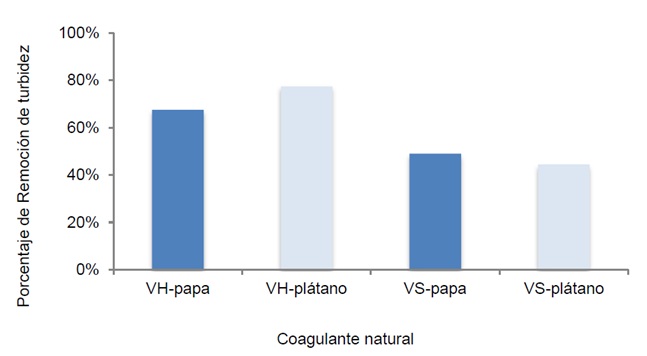
The production of landfill leachate has become a source of water pollution. The coagulation–flocculation method has been used to remove contaminants from leachate using chemical coagulants. In the search for natural coagulants, starch obtained from potato and plantain waste has been considered as an alternative for this process. The objective of this study was to evaluate the ef fectiveness of contaminant removal from landfill leachate using potato and plantain starch obtained from agro-industrial waste. Potato and plantain starch were extracted using both wet and dry methods. The optimal starch dosage and pH for maximum turbidity removal were determined. Subsequently, four treatments were evaluated: T-A (aluminum sulfate), T-AB (sulfate + plantain starch), T-AC (sulfate + potato starch), and T-BC (potato + plantain starch), using the coagulation–flocculation method. This analysis was performed according to ASTM International standard procedures using jar test equipment. Turbidity and chemical oxygen demand (COD) were determined, and their removal percentages were calculated. Analysis of variance and Tukey’s test were performed using STATISTICA 7 sof tware. The results showed that pre-acidification of the leachate to pH 2.5 yielded better turbidity removal (70.1–83.7%) and COD removal (37.8–39.6%) across all treatments, with no significant dif ferences among them. It is concluded that natural coagulants obtained from potato and plantain waste are more ef fective under acidic pH conditions and represent an alternative to reduce the use of chemical coagulants and minimize their environmental impact.
Downloads