Global Research Trends on Plant Growth-Promoting Rhizobacteria in Maize (Zea mays L.): A Bibliometric Analysis
DOI:
https://doi.org/10.28940/terralatinoamericana.v44i.2341Keywords:
local germplasm, microbial inoculants, agricultural sustainabilityAbstract
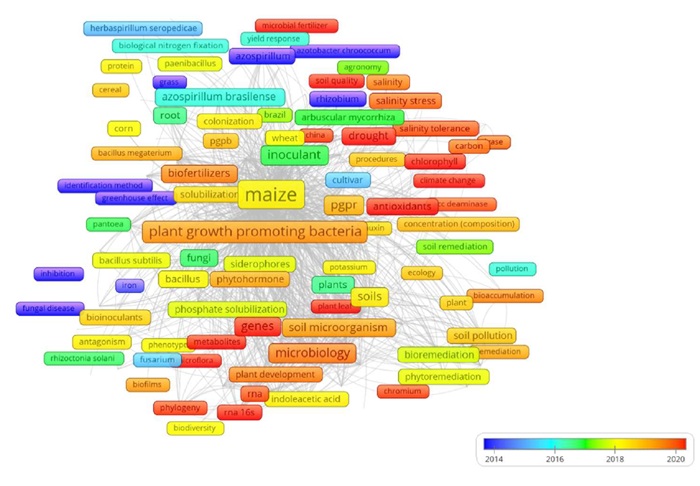
Maize cultivation faces growing challenges due to adverse environmental conditions and reliance on chemical fertilizers, which compromise its sustainability. In response, plant growth-promoting rhizobacteria (PGPR) have emerged as a viable biotechnological alternative for enhancing crop yields, reducing fertilizer use, and mitigating environmental impact. This study, conducted in 2024, aimed to analyze scientific trends, emerging topics, and significant contributions regarding the use of PGPR in maize through a bibliometric analysis. A total of 882 publications (1986–2024) were collected and analyzed using VOSviewer sof tware, examining patterns of co-authorship, co-citation, and keyword co-occurrence. The contributions of countries such as Brazil, China, and Pakistan were highlighted, as well as the relevance of bacterial genera such as Azospirillum, Pseudomonas, and Bacillus for their positive ef fects on maize yield, abiotic stress tolerance, and fertilizer use ef ficiency. The results reveal a thematic evolution from rhizobacteria characterization toward applications focused on agricultural resilience. It is concluded that PGPR have strong potential to enhance agricultural sustainability, especially when integrated with local germplasm and traditional practices of Indigenous communities such as the Mixe, Nahuatl, and Totonac peoples. The discovery of nitrogen-fixing bacteria in the mucilage of native maize varieties represents a key opportunity; however, ef fective implementation requires overcoming technical, regulatory, and sociocultural barriers through multidisciplinary research and technological transfer to the field.
Downloads