Folic Acid (vitamin B9) or Inoculation with Beneficial Microbes Enhances Plant Growth in Phaseolus vulgaris L.
DOI:
https://doi.org/10.28940/terralatinoamericana.v43i.2090Keywords:
arbuscular micorrhizal fungi, B9, chlorophyll, prolineAbstract
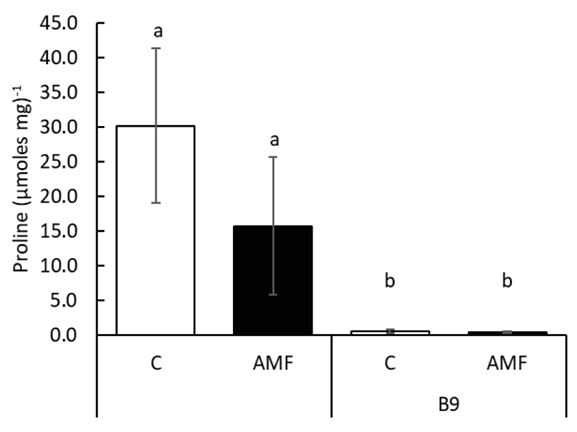
Folic acid (vitamin B9) plays a crucial role in chlorophyll synthesis, and its exogenous application to plants could positively influence the Dark Green Color Index (DGCI) and plant growth. This study investigated how vitamin B9 supplementation could affect the growth of inoculated Phaseolus vulgaris L. (Fabaceae) and its symbiont. The inoculant used contained both arbuscular mycorrhizal fungi (AMF) and bacteria. We measured DGCI in leaves, plant growth variables and AMF colonization 35 days after seeding. Our results showed that in P. vulgaris treated with vitamin B9, both plant growth and DGCI increased compared to controls. However, the addition of vitamin B9 to P. vulgaris plants, inoculated with a mixture of AM fungi and bacteria, did not further increase plant growth, suggesting that inoculated plants are not limited by vitamin B9. This study is the first to highlight the role of vitamin B9 in inoculated P. vulgaris plants. Independently, both vitamin B9 amendment and inoculation with beneficial microbes increased the measured variables; though, their combined effect was not additive. Therefore, our results suggest that the addition of vitamin B9 does not further increase the measured variables when the plants are inoculated with a mixed AMF and bacterial inoculant.
Downloads