Alternatives for Phytoremediation of Heavy Metals Present in Soils with Corn Crops, a Case Study from Los Ríos province, Ecuador
DOI:
https://doi.org/10.28940/terralatinoamericana.v44i.2434Keywords:
agrochemicals, bioremediation, ornamental plantsAbstract
The soil contamination by heavy metals derived from the intensive use of agrochemicals represents a growing threat to food security and agricultural sustainability. In response to this problem, phytoremediation has emerged as an ecological and low-cost technique that takes advantage of plants’ natural ability to absorb and stabilize metal contaminants. The objective of this study was to analyze phytoremediation alternatives for heavy metals present in soils with corn (Zea mays) crops in the province of Los Ríos, Ecuador. Structured surveys were administered to 260 farmers in five cantons (Quevedo, Mocache, Quinsaloma, Puebloviejo,
and Ventanas) to identify the types, doses, and frequency of agrochemical use, and a
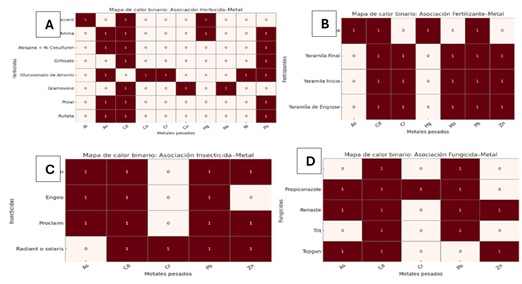
correspondence matrix was developed between active ingredients and associated metals, which was compared with Ecuadorian and international regulations. The results showed that 21% of farmers used herbicides containing atrazine, associated with cadmium (Cd), lead (Pb), and arsenic (As), while urea contributed Hg and Cd, with Mocache and Ventanas being the cantons with the highest doses applied. In addition, species with high bioaccumulation capacity were identified, notably Sansevieria trifasciata, Helianthus annuus, and Sorghum bicolor, which have local adaptability and potential for combined phytoremediation schemes. The study provides key information for sustainable agricultural management in tropical regions. Its main contribution lies in the design of a phytoremediation strategy based on accessible ornamental species, capable of reducing metal contaminants, restoring soil fertility, and promoting sustainable agricultural practices, demonstrating the technical and environmental viability of phytoremediation as a mitigation tool in local production systems.
Downloads
References
Alaboudi, K. A., Ahmed, B., & Brodie, G. (2018). Phytoremediation of Pb and Cd contaminated soils using Helianthus annuus (sunflower) plants. Environmental Science and Pollution Research, 25(22), 21833–21844. https://doi.org/10.1016/j.aoas.2018.05.007
Anas, M., Khan, S., Zhen, L., Shah, S. H. H., Alharbi, T., & El-Serehy, H. A. (2025). EDTA-enhanced phytoextraction: Leveraging Ricinus communis to remove Pb and Cd from contaminated agricultural soils. Plant and Soil, 498(1–2), 1–16. https://doi.org/10.1007/s10725-024-01270-7
Esparza-Olalla, J. E., Forero-Lugo, F. C., & Mardones-Montanares, M. A. (2020). Uso de organofosforados por agricultores de la comunidad de Guaslán-Ecuador y los cambios hematológicos. Ciencia y Agricultura, 17(1), 31–50. https://doi.org/10.19053/01228420.v17.n1.2020.10603
Fei, X., Xiao, R., Christakos, G., & Langousis, A. (2019). Comprehensive assessment of heavy metal pollution sources in Shanghai agricultural soils with different fertility levels. Science of the Total Environment, 634, 922–934. https://doi.org/10.1016/j.ecolind.2019.105508
Instituto Nacional de Estadística y Censos (INEC). (2021). Módulo de Información Ambiental y Tecnificación Agropecuaria (ESPAC 2020): Principales resultados. Quito, Ecuador. https://www.ecuadorencifras.gob.ec/documentos/web-inec/Encuestas_Ambientales/Modulo_Ambiental_ESPAC_2020/PRINC_RESUL_MOD_AGROTEC_2020_08_4.pdf
Ibrahim, N., & El-Afandi, G. (2020). Phytoremediation models for heavy metal (Pb, Cd, and Zn) uptake using Nerium oleander. Heliyon, 6(7), e04391. https://doi.org/10.1016/j.heliyon.2020.e04445
INEN. (2013). Transporte, Almacenamiento y Manejo de Materiales Peligrosos. Ecuador.
Jaskulak, M., Grobelak, A. y Vandenbulcke, F. (2020). Assisted phytoremediation of heavy-metal-contaminated soils: Key opportunities, limitations, and future perspectives. Environmental Research, 16, 210–222. https://doi.org/10.1016/j.chemosphere.2020.126196
Li, X., & Yang, Y. (2020). Preliminary study on Cd accumulation characteristics in Sansevieria trifasciata Prain. Plant Diversity, 42(5), 351-355. https://doi.org/10.1016/j.pld.2020.05.001
Liu, Z.-Q., Li, H.-L., Zeng, X., Huang, X., & Wong, M. (2020). Coupling phytoremediation of cadmium-contaminated soil with safe crop production based on a sorghum farming system. Journal of Cleaner Production, 275, 123002. https://doi.org/10.1016/j.jclepro.2020.123002
MAG. (2020). Resumen Ejecutivo de los Diagnósticos territoriales del Sector Agrario. Ministerio de Agricultura y Ganadería - Coordinación de General de Planificación y Gestión Estratégica. Quito.
Marrero-Coto, J. A. S. (2015). Fitorremediación: una tecnología que involucra a plantas y microorganismos en el saneamiento ambiental. Revista ICIDCA sobre los Derivados de la Caña de Azúcar, 49(2), 11–18.
Patra, D. K., Pradhan, C., & Patra, H. K. (2020). Toxic metal decontamination by phytoremediation approach: Concept, challenges, opportunities and future perspectives. Environmental Technology & Innovation, 18, 100672. https://doi.org/10.1016/j.eti.2020.100672
Qin, G., Niu, Z., Yu, J. y Li, Z. (2021). Heavy metal soil contamination and food security in China: Effects, sources, and remediation technologies. Journal of Environmental Management, 12, 110–124. https://doi.org/10.1016/j.chemosphere.2020.129205
Rodas, I. (2017). Contaminación de los suelos agrícolas provocados por el uso de los agroquímicos de la parroquia San Juaquín .
Jeevanantham, S., Saravanan, A., Hemavathy, R. V., Kumar, P. S., Yaashikaa, P. R., & Yuvaraj, D. (2019). Removal of toxic pollutants from water environment by phytoremediation: A survey on application and future prospects. Environmental Technology & Innovation, 13, 264–276. https://doi.org/10.1016/j.eti.2018.12.007
Shah, V., & Daverey, A. (2020). Phytoremediation: A multidisciplinary approach to clean up heavy metal contaminated soil. Environmental Technology & Innovation, 18, 100774. https://doi.org/10.1016/j.eti.2020.100774
Sun, J., Pan, L., Tsang, D. C. W., Zhan, Y., Zhu, L., & Li, X. (2018). Organic contamination and remediation in the agricultural soils of China: A critical review. Science of the Total Environment, 615, 724–740. https://doi.org/10.1016/j.scitotenv.2017.09.271
Vallejo, M. A. (2012). Acuerdo N°142 - Listado nacionales de sustancias peligrosas químicas peligrosas, desechos peligrosos y especiales . Ecuador .
Yi, X. y Xuenfeng, L. (2017). Remediation of agricultural soils contaminated with heavy metals using clay minerals. Pedosphere, 27(3), 456–468. 10.1016/S1002-0160(17)60310-2
Zhang, H., Yuan, X., Xiong, T., Wang, H. y Jiang, L. (2020). Bioremediation of co-contaminated soil with heavy metals and pesticides: Influence factors, mechanisms and evaluation methods. Science of the Total Environment, 722, 137797. https://doi.org/10.1016/j.cej.2020.125657