Soil Quality and Relative land Ef ficiency in the Milpa System Intercropped with Fruit trees
DOI:
https://doi.org/10.28940/terralatinoamericana.v44i.2361Keywords:
agroforestry, apple tree, MIAF, edaphic microorganisms, yieldsAbstract
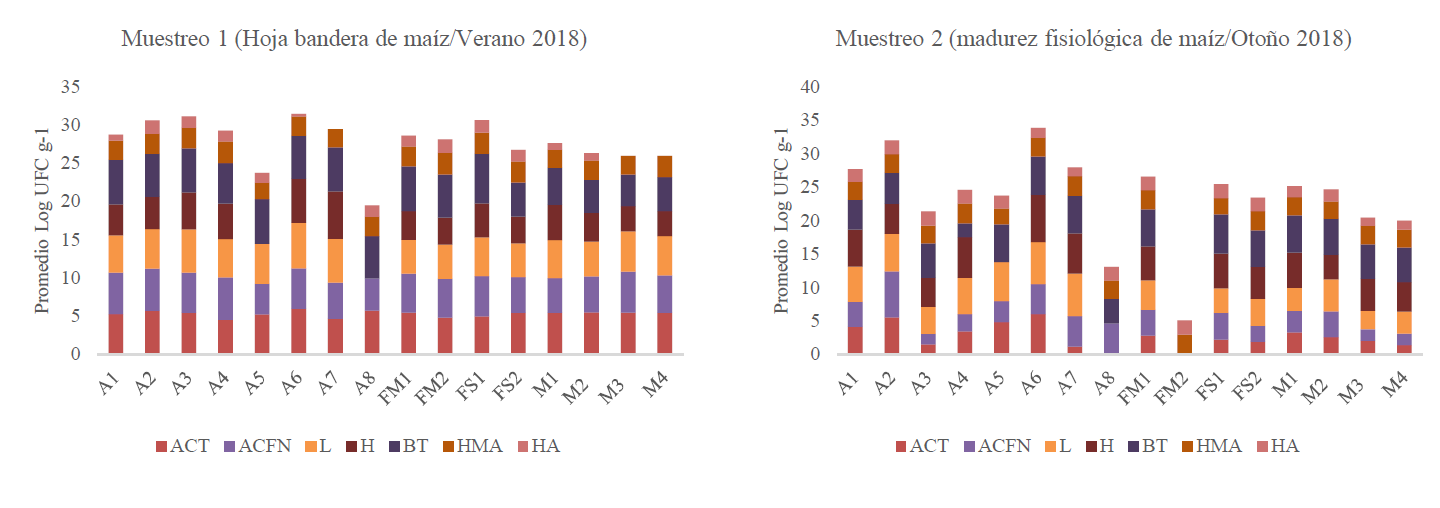
The Milpa system interspersed with fruit trees (MIFT) is a multifunctional agroforestry system that seeks to increase productivity in small production units (< 5 ha). This study evaluated physical, chemical, and microbiological attributes to determine soil quality and its relationship with relative land ef ficiency (ERT) in a MIAF system. Ten sites under the MIAF system and six under monoculture were compared during two growing seasons (2018–2019). In composite soil samples, physical, chemical, and microbiological attributes were measured to calculate a soil quality index (ICS), and ERT was determined. Analysis of variance (ANOVA), Tukey’s test (α = 0.05), and principal component analysis (PCA) were performed to generate the ICS. The results showed dif ferences in bulk density, gravimetric moisture, oxidizable organic matter, total organic matter, and nutrient content, with better values in the MIAF system. The ICS was higher in the MIAF system with the maize–bean association, with bulk density, gravimetric moisture, total organic matter, and the abundance of nitrogen-fixing actinomycetes being the most important parameters identified by the PCA. The ERT showed values greater than one and did not correlate with the ICS or with any individual soil attribute. The most relevant soil quality indices showed higher values at sites under the MIAF system compared with monoculture systems. However, no correlation was observed between the ICS and the ERT.Downloads
Download data is not yet available.
Publication Facts
Metric
This article
Other articles
Peer reviewers
3
2.4
Reviewer profiles N/A
Author statements
Author statements
This article
Other articles
Data availability
N/A
16%
External funding
N/A
32%
Competing interests
N/A
11%
Metric
This journal
Other journals
Articles accepted
53%
33%
Days to publication
203
145
- Editor & editorial board
- profiles
- Academic society
- Terra Latinoamericana
- Publisher
- Mexican Society of Soil Science, C.A.

To learn about these publication facts, click 
PF is maintained by the Public Knowledge Project
Downloads
Published
31-01-2026
How to Cite
Duché-García, T., Ocampo-Fletes, I., Cruz-Hernández, J., Hernández-Guzmán, J. A., Macías-López, A., Jiménez-García, D., & Hernández-Romero, E. (2026). Soil Quality and Relative land Ef ficiency in the Milpa System Intercropped with Fruit trees. REVISTA TERRA LATINOAMERICANA, 44. https://doi.org/10.28940/terralatinoamericana.v44i.2361
Issue
Section
Scientific Papers