Fertilization in Maize Globally and in Mexico: a Bibliometric Analysis from 2000 to 2025
DOI:
https://doi.org/10.28940/terralatinoamericana.v44i.2288Keywords:
fertilizer, scientific mapping, Scopus, VOSviewer, Zea mays L.Abstract
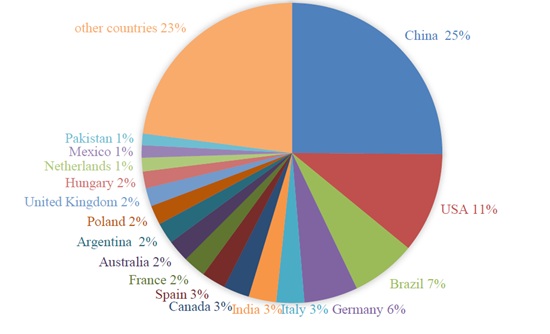
Maize (Zea mays L.) production plays a fundamental role in global food security due to its importance as a staple food and as an essential component of the basic food basket, as well as its socioeconomic and cultural relevance in Mexico. Maize fertilization is one of the main practices used to increase yield, and maintaining soil health is currently considered a priority. Sustainability and the search for new methods and complementary fertilization approaches have gained importance in order to improve the efficiency of these practices, reduce harmful side effects, and optimize the use of natural and economic resources. This study was conducted to identify and quantify, through bibliometric analysis, the scientific production related to maize fertilization over the past 25 years (2000–2025). Two databases, Scopus and Google Scholar, were used, applying bibliometric methods based on performance analysis (H-index, productivity, and citations) and scientific mapping (keyword co-occurrence) for the corresponding period. VOSviewer and Excel were used to evaluate the bibliometric indicators. The findings revealed a polynomial global trend in scientific publications related to this topic, as well as Mexico’s contribution, which showed a linear pattern followed by a decline in recent years. The most prolific authors, predominant journals, leading papers, institutions, the most influential countries, and the main research lines in this field were identified both globally and within Mexico. The main benefits of conducting this study include the global exploration of research themes and ongoing or implemented research lines, as well as facilitating the reorientation and support of future research related to this subject.
Downloads