Antifungal Extracts and Metabolites from Trichoderma asperellum Samuels, Lieckf. & Nirenberg with Potential Application in the Control of Agricultural Phytopathogens
DOI:
https://doi.org/10.28940/terralatinoamericana.v44i.2308Keywords:
agriculture, biofertilizers, biotechnology, biological controlAbstract
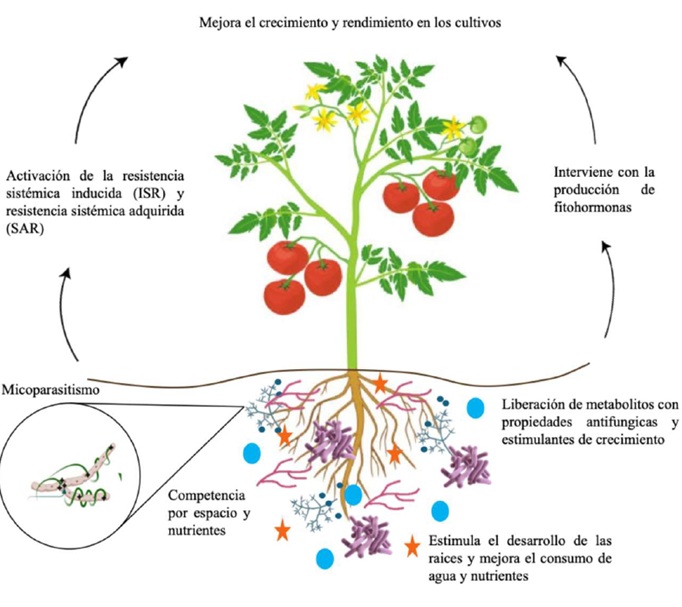
Population growth demands an increased food supply. Therefore, there is a need to develop alternatives to synthetic fungicides with low environmental impact for controlling diseases in agricultural crops. The genus Trichoderma is widely reported as a beneficial microorganism in agriculture and as a biological control strategy against phytopathogenic fungi. The fungus T. asperellum biosynthesises metabolites that are utilized by plants to stimulate growth or to tolerate pathogen attacks. In accordance with the above, this study aimed to compile information on the volatile and non-volatile metabolites reported for T. asperellum with potential use to control fungal diseases on agricultural crops. A database was compiled from articles and patents published between 2014 and 2024 in four public and two commercial databases. Records for ‘Trichoderma’ and ‘ Trichoderma asperellum’ regarding extract type, metabolite, activity, and isolation site indicated a total of 702 metabolites from T. asperellum. A total of 622 volatile metabolites were produced by twelve strains, one of which, 6-pentyl-α-pyron, has been reported to promote plant growth and exhibit significant antifungal activity. In addition, 80 non-volatile metabolites of dif ferent chemical nature were detected in nine strains of T. asperellum, with activity against phytopathogenic fungi. Among the patents, seven relate to the individual use of T. asperellum for the production of metabolites for agricultural purposes. To continue with complementary studies, such as stability, mechanism of action, and toxicity, the active ingredients in the extracts should be purified and identified. The extracts and metabolites secreted by T. asperellum could provide an eco-friendly alternative to synthetic fungicides for controlling fungal diseases in crops.
Downloads
References
Beca Posdoctoral No. 766877