Phenotypic Plasticity Under Salt Stress in Legume Grasses
DOI:
https://doi.org/10.28940/terra.v43i.1946Keywords:
biomass accumulation, biomass, nutrients, salinityAbstract
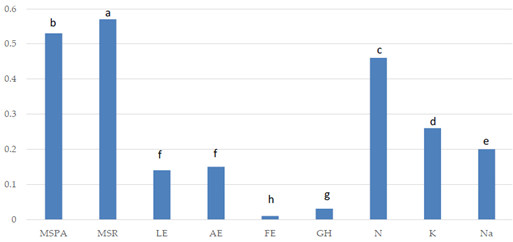
The present research investigated the phenotypic plasticity of pasture legumes subjected to salinity stress in a semi-controlled environment. Two salinity levels were tested (0.02 dS m-¹ and 10 dS m-¹) to assess their impact on aerial and root biomass accumulation, as well as histological characteristics and nitrogen, sodium, and potassium accumulation. Findings indicated a detrimental salinity ef fect on all measured traits in the legumes examined. Species such as Sesbania rostrata, Leucaena leucocephala, Clitoria ternatea, Centrosema pubescens, and Canavalia ensiformis notably exhibited significant phenotypic adaptability to salt stress across the parameters evaluated. Aerial and root dry matter, along with nitrogen accumulation, demonstrated the highest phenotypic plasticity indices in response to salinity. Additionally, the consistent sodium accumulation observed suggests that these species may employ sodium exclusion as a mechanism to cope with salt stress. Future research is warranted to explore photosynthesis and other growth stages, which would enhance understanding the phenotypic plasticity of these legumes under saline conditions.
Downloads