Nutrient Input from Litterfall in Forest Ecosystems
DOI:
https://doi.org/10.28940/terralatinoamericana.v43i.2187Keywords:
diversity, structure, physicochemical, pineAbstract
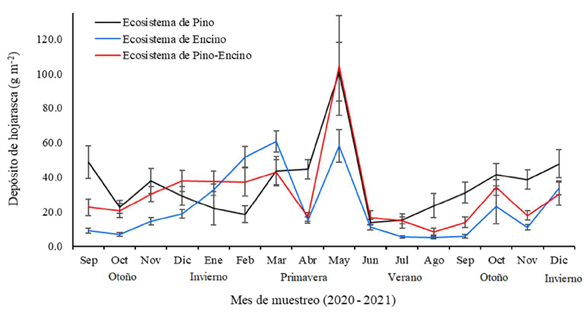
In forest ecosystems, litterfall plays a fundamental role in nutrient transfer within the plant-soil system. The objective of this study was to evaluate litterfall deposition, nutrient input and ef ficient use of the macronutrients in three forest ecosystems (Pine, Oak and Pine-Oak) in Galeana, Nuevo León, located in northeastern México, under the hypothesis that each plan community exhibits distinct patterns due to its structure and diversity. Ten litterfall traps of 1 m2 were randomly placed in a 2500 m2 plot (50 m × 50 m) in each forest ecosystem. The collections of deposited material were conducted biweekly to obtain a monthly representation of litterfall over a 16-month period. Litterfall was highest in the Pine ecosystem (579.74 g m-2 year-1), followed by Pino-Oak (486.40 g m-2 year-1) and Oak (362.49 g m-2 year-1) ecosystems. The order nutrient deposition was Ca > K > Mg > P, with the highest nutrient concentration found in the Pine-Oak ecosystem and the lowest in the Pine ecosystem. Regarding nutrient ef ficient use, Mg and P were identified as limiting elements in all three ecosystems, while Ca and K showed the highest concentrations in the litterfall. The results of the highest nutrition deposition were not related to the amount of leaf litterfall, evidencing spatial and temporal variation in leaf litter production and nutrient deposition. Therefore, the litterfall, nutrient production and their use ef ficiency depend on the plan diversity and chemical composition of litterfall in each ecosystem, as well as in climate and species phenology.
Downloads