Arbuscular Mycorrhizal symbiosis as a Tolerance Mechanism of Brachiaria decumbens to Combined Lead and Aluminum Stress Under Greenhouse Conditions
DOI:
https://doi.org/10.28940/terralatinoamericana.v44i.2468Keywords:
plant biomass, bioremediation, beneficial fungi, heavy metal, soilAbstract
The present study addressed the contamination of agricultural soils by lead (Pb) and aluminum (Al), elements that restrict plant growth and compromise agricultural sustainability. A greenhouse experiment was conducted to assess the potential of arbuscular mycorrhizal fungi (AMF) consortia from the genera Glomus, Acaulospora, and Gigaspora to mitigate these effects in Brachiaria decumbens. The results demonstrated that AMF inoculation enhanced plant growth. In treatment I2_C3, stem diameter reached 1.6 cm and plant height exceeded 90 cm at 75 days with Acaulospora. Leaf fresh weight reached 27 g in I2_C3 compared with 22 g in I1_C3,while leaf dry weight ranged from 17 to 18 g, confirming the efficiency of Acaulospora under metal stress. For root development, I3_C2 achieved a length of 50 cm, doubling that of I1_C1. Regarding metal accumulation, I3 treatments maintained intermediate Pb levels (13–18 mg kg–¹) compared with I1_C3 (28 mg kg–¹). In the case of Al, concentrations were high across all contaminated treatments, reaching up to
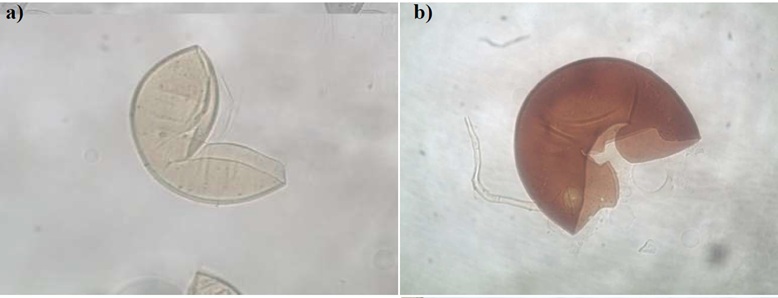
420 mg kg–¹, although without compromising biomass in I1. Principal component analysis explained 64.28% of the total variability, revealing a negative correlation between metal concentrations and growth variables, thus confirming the modulatory role of AMF symbiosis. Morphological characterization verified the presence of Glomus, Acaulospora, and Gigaspora, highlighting the functional diversity of the consortia. These findings demonstrate that the selection of AMF, particularly Acaulospora, represents an effective biotechnological strategy to enhance the growth of B. decumbens and reduce metal accumulation.
Downloads