Alginate Capsules Supplemented with Trichoderma harzianum and Radish Root Extract (Raphanus sativus L.) for the Promotion of Plant Development in Capsicum annuum L.
DOI:
https://doi.org/10.28940/terra.latinam..v44i.2540Keywords:
sodium alginate, bioinoculants, ionic gelation, controlled release, microbial viabilityAbstract
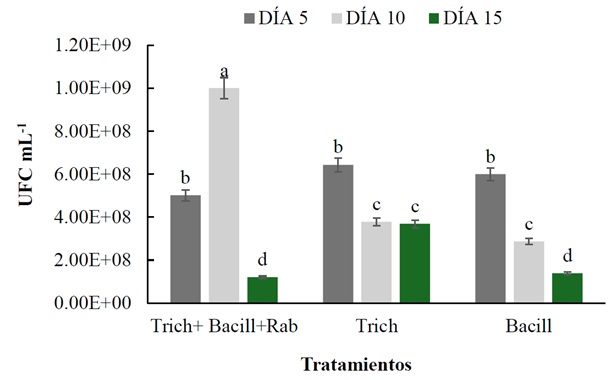
The development of encapsulated biological formulations represents an innovative strategy to improve the stability, viability, and ef ficiency of plant growth–promoting microorganisms, contributing to sustainable agricultural systems. The present study evaluated the ef fect of alginate capsules supplemented with Trichoderma harzianum, Bacillus subtilis, and radish root extract (Raphanus sativus L.) on microbial viability, physicochemical properties of the formulation, and growth promotion in Capsicum annuum L. seedlings. Microbial growth kinetics were determined through colony-forming unit counts (CFU mL–¹) in order to identify optimal growth phases for encapsulation. Capsules were produced by ionic gelation using sodium alginate as the polymeric matrix, and microbial viability was evaluated at 5, 10, and 15 days of storage, together with water content, disintegration time, and dimensional stability. Results showed that the combined formulation (Trich+Bacill+Rab) exhibited higher microbial viability during storage, reaching concentrations above 1.0 × 10⁹ CFU mL–¹ at day 15 compared to individual formulations. Furthermore, the inclusion of radish extract modified the physical properties of the capsules, promoting faster disintegration and potential controlled release of microorganisms. At the agronomic level, seedlings treated with the combined formulation showed significant increases (p < 0.05) in plant height, stem diameter, relative chlorophyll content, root volume, and fresh and dry biomass accumulation at 21 days af ter emergence. These findings demonstrate that co-encapsulation in alginate represents an ef ficient alternative for the development of functional bioinoculants aimed at improving early plant growth and promoting sustainable agricultural practices.
Downloads