Rhizospheric Bacterial Consortia as Biostimulants in the Cultivation of Cattleya maxima Orchids
DOI:
https://doi.org/10.28940/terra.latinam..v44i.2556Keywords:
bacteria, stimulation, propagation, plant protectionAbstract
Cattleya maxima is an epiphytic orchid endemic to Ecuador with high ornamental and ecological value, whose propagation is limited by slow growth and low initial ef ficiency in nutrient uptake during early developmental stages, due to the presence of seed dormancy that delays germination and seedling establishment. The objective of this study was to characterize rhizospheric bacteria with potential
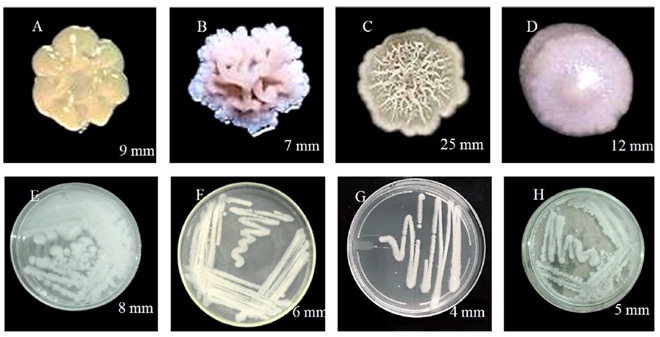
bio-stimulatory activity and evaluate their ef fect on the initial establishment of Cattleya maxima seedlings during the transition from tissue culture to nursery conditions. Eight bacterial strains were isolated from orchid-associated rhizospheric soil and selected based on morphological characterization, Gram staining, and functional biochemical assays, including urease, amylase, and indole-3-acetic acid production related to plant growth promotion. Antagonistic activity was assessed using dual culture assays against Fusarium oxysporum, while bio-stimulatory ef fectiveness was evaluated in a Completely Randomized Design with individual, combined, and unixnoculated control treatments, quantifying leaf number, root length (cm), plant height (cm), and fresh biomass (g). The results showed significant dif ferences between treatments (p < 0.05), with the highest fungal growth inhibition recorded for Bacillus spp. (66%), followed by actinomycetes (57%) and Pseudomonas spp. (54%). Microbial inoculation improved seedling morpho-functional performance compared to the control, with the combined treatment maximizing leaf number (6.22 ± 0.40), root length (4.05 ± 0.39 cm), and plant height (5.42 ± 0.43 cm), while the highest fresh biomass was obtained with actinomycetes (10.56 ± 0.73 g). These findings demonstrate that functional selection of rhizospheric bacteria significantly enhances the initial establishment of C. maxima.
Downloads