Production and Mineralization of Sargassum Hydrochar (Sargassum sp.)
DOI:
https://doi.org/10.28940/terralatinoamericana.v43i.2206Keywords:
sands-beach, CO2, recalcitrance, soilAbstract
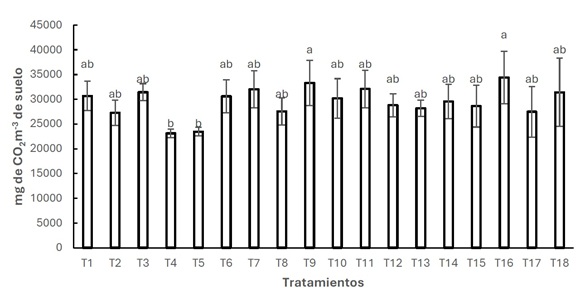
Holopelagic sargassum along the coasts of the Mexican Caribbean has affected both natural ecosystems and human activities, with accumulations estimated to reach up to 20 million tons along more than 8850 km of coastline. These large quantities of algal biomass can be converted into recalcitrant carbonaceous material through a hydrothermal process, reducing their volume by up to 60% and facilitating biomass management. Hydrochar derived from sargassum was produced and characterized using different particle diameters (1.0, 0.5, and 0.25 mm) at 180 °C for 2 h. Five grams of hydrochar and natural sargassum were separately incubated at field capacity in 100 g of Vertisol, loam soil, and beach sands from Tulum, Mexico. All substrates were previously sieved and homogenized to a particle diameter of 0.18 mm. Carbon dioxide (CO2) emissions were measured every third day over a one-month incubation period. Absolute and relative mineralization rates in beach sands exhibited the highest CO2 emissions compared with the control and the other soils evaluated. This response was attributed to the presence of aragonite in the sands and exogenous magnesian calcite associated with the sargassum biomass. The particle diameter of 0.5 mm was identified as optimal for sargassum handling, as it resulted in lower CO2 emissions. Sargassum hydrochar should be washed after the hydrothermal process to remove excess labile carbon, thereby reducing CO2 emissions following soil application. Additional studies evaluating different temperature and residence time combinations during hydrochar production are required to further decrease CO2 emissions. It is concluded that sargassum hydrochar offers advantages in terms of volumetric handling and exhibits recalcitrant behavior when applied to beach sands, but not when applied to soils.
Downloads
Publication Facts
Reviewer profiles N/A
Author statements
- Editor & editorial board
- profiles
- Academic society
- Terra Latinoamericana
- Publisher
- Mexican Society of Soil Science, C.A.

To learn about these publication facts, click 
PF is maintained by the Public Knowledge Project