Application of a mixture Design to Evaluate High Concentrations of Ni2+, Fe2+, Zn2+ and Mn2+ in Nutrient Solutions on the Mineral Composition and the Tomato Yield
DOI:
https://doi.org/10.28940/terralatinoamericana.v43i.2165Keywords:
hydroponics, micronutrients, linear regression model, toxicityAbstract
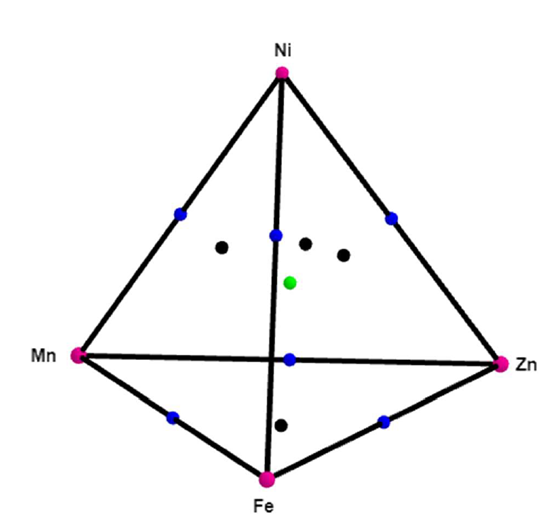
The intensive production of fruit vegetables uses high amounts of fertilizers and pesticides, which contain in their chemical composition elements such as nickel (Ni), iron (Fe), zinc (Zn), and manganese (Mn). These elements are absorbed by plants and accumulate in the fruits, increasing the health risk to consumers. The objective of this study was to apply a mixture design to evaluate nutrient solutions with high concentrations of Ni²+, Mn²+, Fe²+, and Zn²+ on the mineral composition and yield of tomato (Solanum lycopersicum cv. SV8579TE). The hydroponic system was closed and used peat (Sphagnum parda) as the substrate. The experimental design employed was a centroid simplex [4,3] with 15 nutrient solutions and six replicates per treatment, for a total of 90 experimental units. The nutrient solutions were generated using the mixture design methodology with the Design Expert sof tware (version 11). The 15 mixtures of Ni²+, Mn²+, Fe²+, and Zn²+ caused growth arrest of the apical meristem of the main stem and morphological alterations in the plants. The concentrations of Ni, Fe, Zn, and Mn in the fruits were significantly (p ≤ 0.05) af fected by the mixtures. The highest values of Ni, Zn, and Mn were obtained in the pure mixtures, where the element of interest was at the highest concentration (12 mg L-1). The regression models describing these results on the response surface were multiple linear, where increases in the proportions of Ni²+, Mn²+, and Zn²+ in the mixtures increased the concentrations of these elements in the fruits. The average concentrations of Ni, Fe, Zn, and Mn in the fruits did not exceed the limits established by international organizations. Therefore, the consumption of these tomatoes does not represent a risk to human health. The average production (59.3 Mg ha-1) was 37.8% lower than the average yield (95.3 Mg ha-1) obtained in Sinaloa.
Downloads